Pathways After 18™ began with my daughter, Alana. As she approached adulthood, I found myself asking questions that went far beyond her eighteenth birthday.
What would her adult life look like? What would independence mean for her? How could I help her discover what she wanted, rather than make decisions for her?
Alana has Down syndrome, autism, and ADHD. Preparing for her future meant thinking about employment, safety, health care, daily living, and finding her place in the community. Each question led to another.
I came to understand that the transition to adulthood isn’t one transition. It’s many transitions happening at once.
Start with the person.
I looked for guidance, but much of what I found started with a system: an agency, a program, an eligibility requirement,, or a service. Those things mattered, but I was still searching for a starting point centered on Alana—her interests, her strengths, her choices, and her possibilities.
I kept coming back to one thought:
Start with the person.
Before we could plan the next steps, we needed ways to explore what those steps might mean to her. That idea became the foundation for Pathways After 18™ and, eventually, COMPASS MYSTERY™.
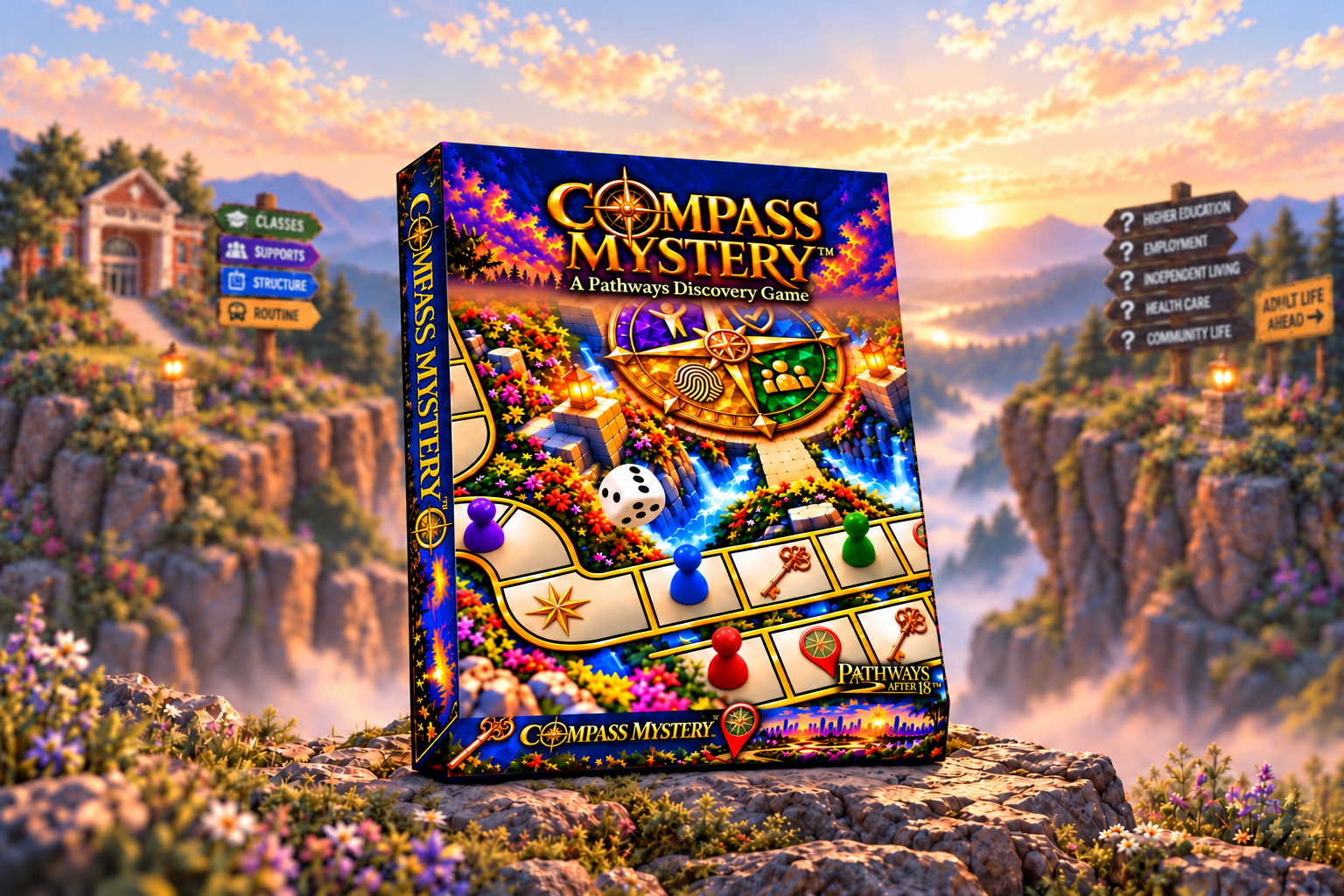
COMPASS MYSTERY™ game box art
Why the box sits between two cliffs
In this image, the COMPASS MYSTERY™ box sits between two cliffs. They're there on purpose.
Those cliffs stand for what I call the Transition Gap. It's the drop-off so many families feel when school ends, and adulthood begins. The supports that held a young person up for years can disappear almost overnight.
The compass represents what I want to help build: a way forward through discovery, preparation, and support. Crossing that gap is the whole point of the game.
Why a game?
Planning for adulthood usually means paperwork and meetings. I wanted something families could do together at a table and actually enjoy.
In COMPASS MYSTERY™, players become explorers. They move through a town, visit real community places like the library, the bank, and City Hall, and gather clues. To win, they solve the mystery of a hidden North Star, Destination, and Pathway Key.
As they play, they practice the same thinking adulthood asks of them: What matters to me? Where do I want to go? What will help me get there? The mystery changes each time they play.
The game is designed for teens of all abilities, with particular attention to young people with disabilities navigating adulthood. My hope is that it opens conversations and helps players begin to picture possibilities for themselves.
Come along for the journey.
Here, I’ll share the story of COMPASS MYSTERY™ as it unfolds.
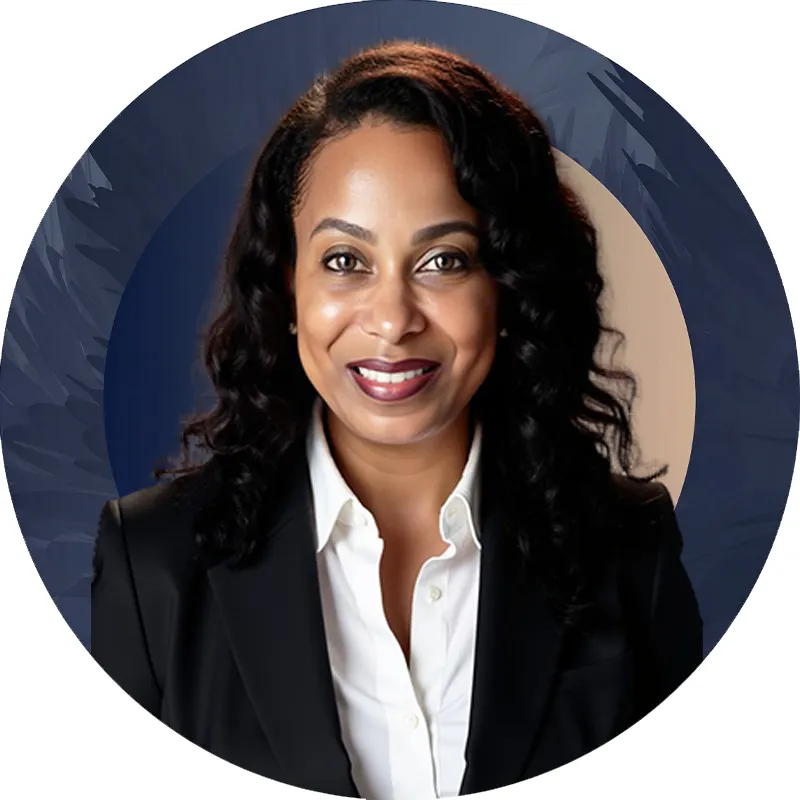
Debra Sweeting is an author, transition planning advocate, and the founder of Pathways After 18™. She is also a Florida Supreme Court Certified Circuit Civil and County Mediator. Inspired by her daughter, Debra created COMPASS MYSTERY™ to help families of teens and young adults explore life after high school through discovery, preparation, and play.